Flat products
For sheet, plate and coil, specify thickness, width, finish and any requirements for flatness or surface protection.

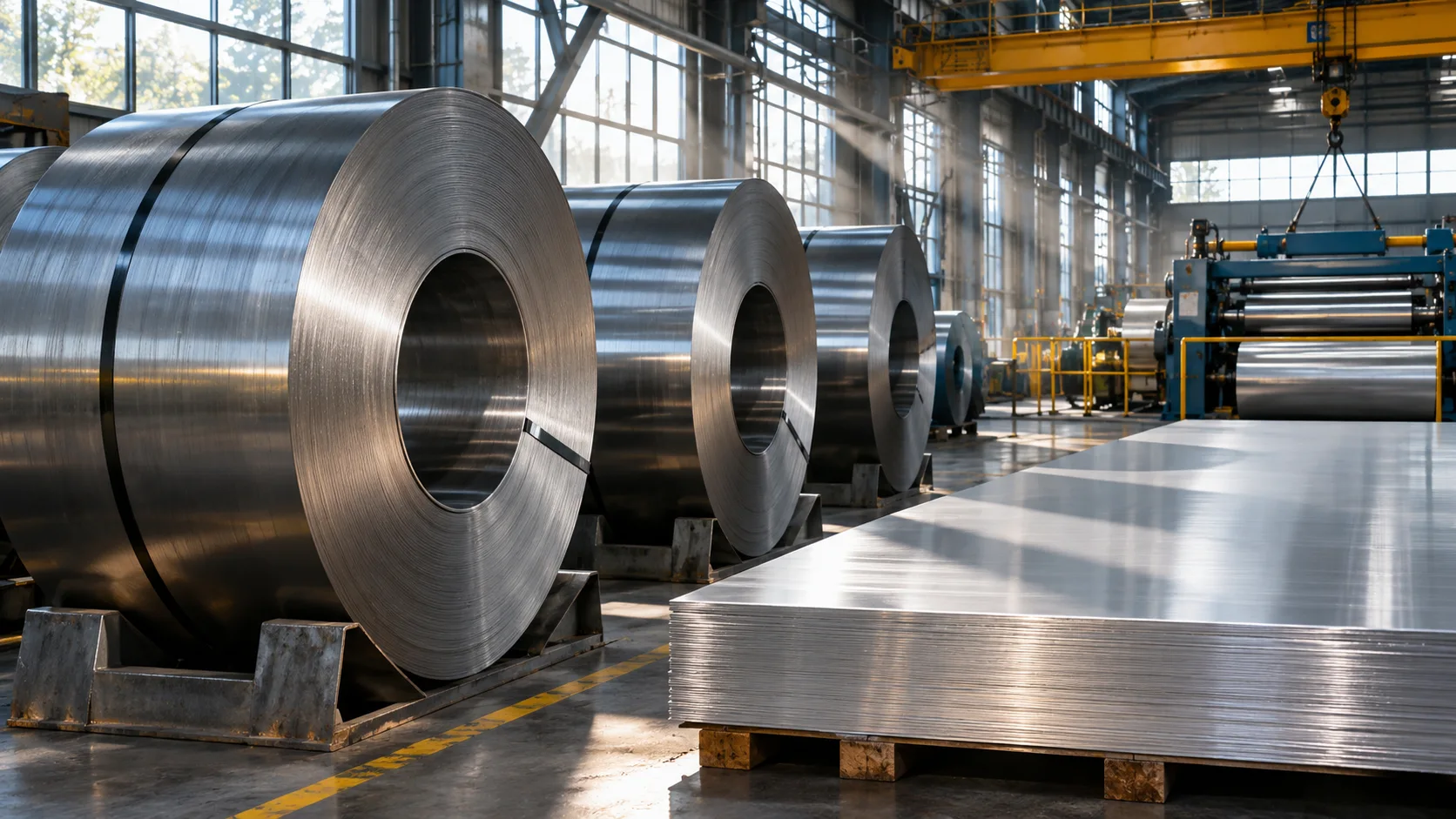
Compare metal grades and mill forms for fabrication, machining and distribution.
Discuss your requirementsSpecify the material standard, grade or alloy and applicable condition or temper. Confirm mechanical properties, surface finish and dimensional tolerances for the quoted form.
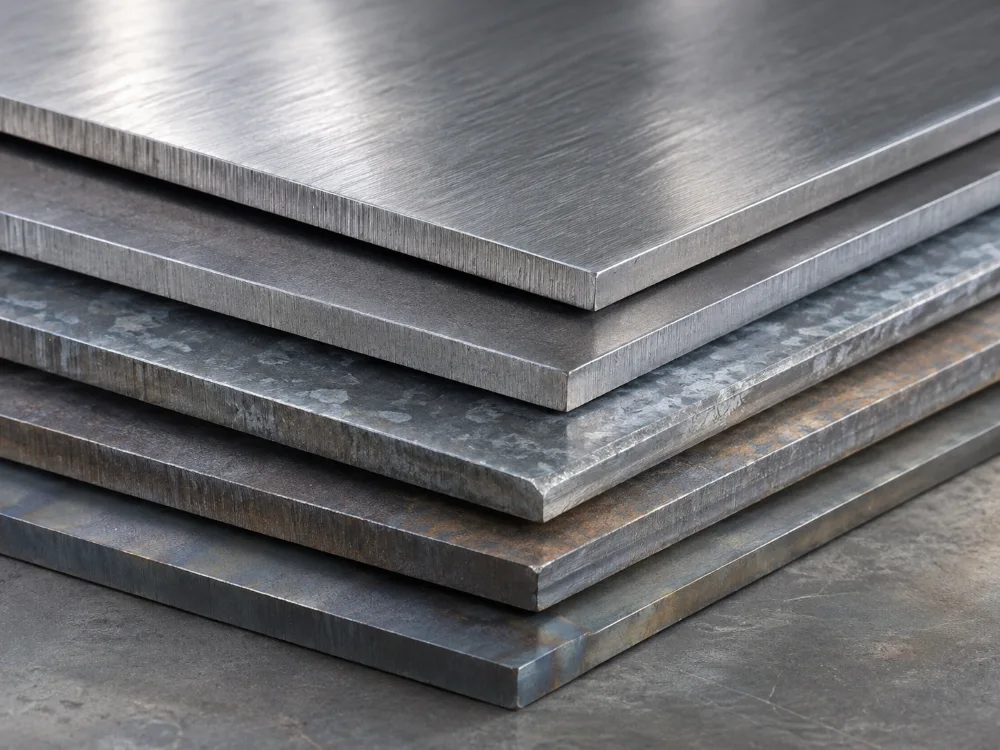
Match heat or lot identifiers on the delivered stock to the inspection documents. Check surface condition and dimensions before cutting, especially for visible or close-tolerance components.
Coils, sheets, plates, bars and profiles are distinct purchasing forms. Define the dimensions and tolerances that matter for the cutting or production process.
For sheet, plate and coil, specify thickness, width, finish and any requirements for flatness or surface protection.
For bars and profiles, confirm section geometry, length tolerance, condition and the machining or forming requirements.
Forming, welding and machining each place different demands on material condition and consistency. Share the intended process and ask how any proposed equivalent will be validated.
Clarify these points when comparing offers.
State the allowable thickness range, relevant standard and other critical dimensions. For coils, also confirm inside diameter, width and maximum coil weight.
Confirm packaging, surface protection and unit weight. Agree on load securing, unloading equipment and how traceability marks will remain legible.
Send a business inquiry